When Formula 1 Falls Silent: The Impact Of The Middle East Crisis
- shiftinggearsuk
- Apr 21
- 3 min read

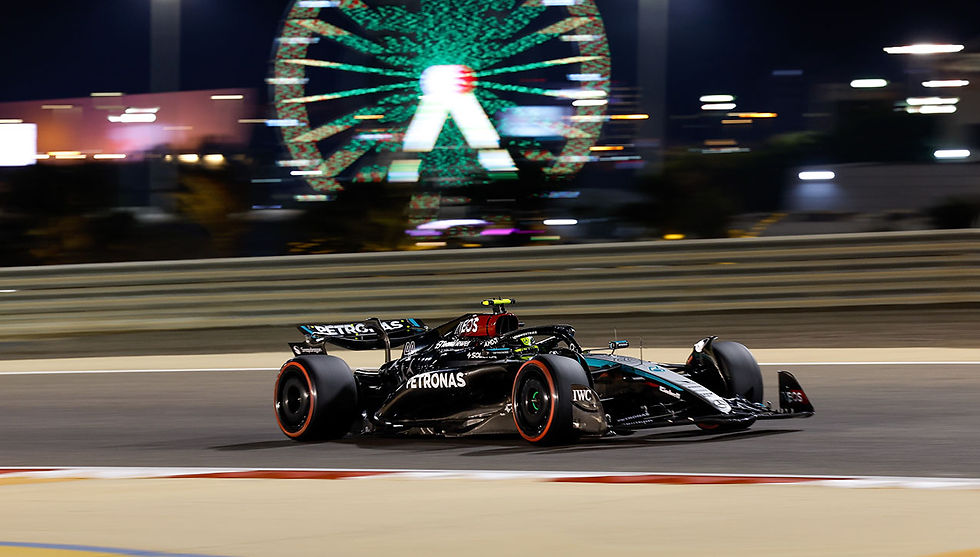
For the first time in decades, the Formula 1 calendar falls silent in April. Both the Bahrain and the Saudi Arabian Grand Prix have been cancelled due to the ongoing crisis in the Middle East. With no replacement races announced, the sport is experiencing an unusual “spring break” in what is normally a tightly packed schedule. While Formula 1 often presents itself as an apolitical global spectacle, current events demonstrate that it cannot escape geopolitical reality.
The cancellation of both races was made official on March 14 following consultations with the FIA. The primary reason is clear: safety concerns. The Bahrain International Circuit, located only around 20 miles from a targeted US military base, lies in close proximity to an active conflict zone. In such circumstances, ensuring the safety of drivers, teams and personnel becomes increasingly difficult to guarantee.
This raises an obvious question: why were the races not replaced or rescheduled?
Among fans, a return to Imola was widely suggested as a possible alternative. However, while appealing in theory, such a solution proves unrealistic in practice. Formula 1 logistics operate on a global scale and are planned months in advance. Freight is transported across continents by sea and air, venues are booked long beforehand, and sponsorship agreements are tied to specific events. Within the short timeframe between the announcement and the scheduled race weekends, organising a replacement event (including ticket sales, infrastructure, and staffing) would not have been feasible.
Rescheduling the races presents similar challenges. The Formula 1 calendar is tightly constructed and leaves little room for adjustments without disrupting the entire season. In addition, the unpredictable nature of the conflict makes it impossible to determine whether the races could safely take place at a later date. Under these conditions, cancellation was not only the safest option, but also the most logical one.
The consequences of this decision extend beyond the immediate loss of two race weekends. The unexpected break, which lasts until the Miami Grand Prix on May 3, provides teams with valuable time for development. Constructors are now able to further refine their cars and adapt to the new regulations introduced this season. This additional preparation time could have a noticeable impact on the competitive order.
At the same time, the reduction to 22 races alters the dynamics of the championship. With fewer opportunities to score points, consistency becomes even more important, potentially leading to a closer title battle as the season progresses.
Financial implications must also be considered. The cancellation results in a loss of revenue from hosting fees and race-specific sponsorships. At the same time, global instability has contributed to rising freight and travel costs, placing further strain on the sport’s economic structure. The exact financial impact remains difficult to quantify, but the consequences could possibly extend beyond the current season.
Formula 1 is not alone in facing these challenges. Other racing series have also been forced to adapt, with Super GT postponing its Sepang round and both Formula 2 and Formula 1 Academy affected by the revised schedule. This broader disruption raises fundamental questions about the long-term viability of global racing calendars in an increasingly unstable geopolitical climate.
Looking ahead, uncertainty remains. Two further races in the region are still scheduled to take place, with Qatar in November and the season finale in Abu Dhabi. Whether they can go ahead as planned will largely depend on how the situation develops. Additional cancellations cannot be ruled out.
Despite the ongoing crisis, Stefano Domenicali has expressed hope that Formula 1 will return to the region as soon as circumstances allow it. Until then, the current pause serves as a reminder that even a global sport as powerful as Formula 1 is not immune to the realities of the world around it.
Written by Leonie


Comments